
Non-Affliction Guilt
Share this page on Bluesky or by Email

100% AI Free



Share This Page By Email
As a person with a fully able body, have you ever felt uncomfortable when meeting someone who is not able bodied, a person who may be afflicted with some form of debilitating condition? That would not be rare or even uncommon.
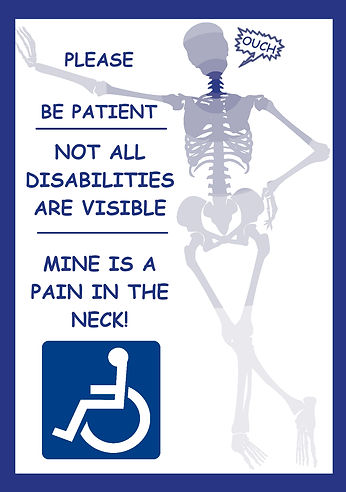
What makes some people uncomfortable when first meeting a person with a disability? One obvious answer is simply that Persons With Disabilities or PWD* are not as common as persons without disabilities. Most people don’t need to deal with PWD except for the occasional brief encounter. So, many able body persons are not well practised at meeting PWD.
As a PWD myself, I once noticed a person feeling uncomfortable when we met. I mentioned how I was envious of people as I see them walking briskly, their faces red from the fresh air and heavy breathing. The uncomfortable person said, “It doesn’t make me feel good that I’m healthy.”, and I presumed the person meant, ‘in comparison to being disabled’. Most people feel good about being healthy.
There’s that uncomfortable feeling in his words. His words ring true though – who would feel good about being better off than PWD?
So, why do we feel good about being healthy, until we meet someone who is living with a disability?
Non-affliction guilt.
You may have heard about survivor guilt. It’s how you might feel if your entire neighbourhood burns down, except your house. A far more serious form of survivor guilt might happen from wars. When a group of soldiers train for a long time together, then all but one are killed.
Non-affliction guilt is not the same as survivor guilt, but they are similar. Non-affliction guilt has the same effect as survivor guilt, but to a lesser extent. In either case, you don’t feel ‘lucky’.
But, people are lucky. They just don’t want PWD to feel unlucky, so it becomes uncomfortable to walk the fine line between encouragement and embarrassment, until you’re practised.
People who live and/or work with PWD have practised and are not uncomfortable being with PWD. Non-afflicted people have nothing left to be uncomfortable about, once they realize that PWD are just people.
As a PWD, I have quirks and weird habits, I can be annoying and demanding, I think and talk about myself constantly, I forget how to be considerate to people, even though people are being very kind and generous to me. Then again, I have a lot to offer people in the way of sharing my gifts, experiences and knowledge gained by being a chronic PWD. I’m just a person – who happens to have a disability.
Non-affliction guilt is natural. Just don’t let it stop you from getting to know PWD better.
*- PWD – also represents a “Person With a Disability” or a “Person With Disabilities”.
The wording, “Persons With Disabilities”, is correctly used to represent the individuals living with a disability or disabilities who are part of a group. Whereas, the wording, “people with disabilities”, represents the group over the individuals. PWD are not disabled people, but persons living with disabilities. PWD have abilities!
All Images © J. Robert Waine Dubois